

The Hidden Costs of Bad Print Management for Publishers: A UK Publisher’s Roadmap to Cut Postage, Boost Deliverability & Scale
It is easy to see print as a fixed cost, yet for most magazine teams the real value is hidden in how the work is managed. In the United Kingdom (UK), print management for publishers determines whether each issue ships smoothly, qualifies for the best postage bands, and actually lands on doormats. Poorly controlled workflows behave like a leaky bucket, draining budget through avoidable surcharges, reprints, duplicated mailings, and delays. If you could recover those pounds without compromising editorial quality, would you not want a clear, evidence-based roadmap that pairs operational discipline with smarter postage and distribution?
The Real Price of Inefficient Printing and Mailing for UK Titles
The headline expense in any circulation plan is usually postage, but the largest losses often accumulate in the shadows. Industry audits suggest postage overspend of 8 to 18 percent is common when address data, specifications, or entry points are misaligned with discount rules. Returns and undeliverables quietly erode circulation, depressing advertising value and reader lifetime value. Then there are the intangibles: late press files that force overtime, supplier churn that raises risk, and compliance errors that trigger surcharges. When budgets are tight, every inefficiency compounds. A structured partner such as Cliffe Enterprise Limited helps identify the hidden traps, quantify their impact, and implement the least disruptive fixes first so the savings appear in the next mailing, not the next financial year.
| Hidden Cost Category | How It Shows Up | Typical Impact | Prevented By |
|---|---|---|---|
| Postage Overspend | Wrong weight band, missed entry discounts, non-compliant trays | 5 to 20 percent of mailing budget | Optimised entry, Mailmark barcodes, presort accuracy, correct book weight |
| Returns and Undeliverables | Gone-aways, duplicates, incomplete addresses | 3 to 10 percent of copies wasted; ad value diluted | Address hygiene against PAF (Postal Address File) and de-duplication |
| Reprints and Make-Goods | Quality issues, late changes, incorrect inserts | 1 to 5 percent additional print cost | Preflight, proofs, press-signing protocols, stable specifications |
| Compliance Surcharges | Packaging spec breaches, missing documentation | Up to 15 percent postal uplift | Postal compliance checks, test mailings, accurate manifests |
| Supplier Switching Fatigue | Onboarding time, inconsistent formats, retraining | Operational drag; missed Service Level Agreements (SLA) | Consolidated, accountable print and mail partner with documented workflows |
What “print management for publishers” Really Covers in 2025
In 2025, print management for publishers is not a single task; it is an orchestrated chain of estimation, production, data, compliance, carriage, and reporting. It starts with specification design that aligns editorial intent with postal rules: format, pagination, paper stock, binding, inserts, and final weight. It extends to data processing, barcode generation, wrapping method selection, address carrier layout, and entry planning to secure the best price-performance route domestically and overseas. Critically, it includes audit-grade documentation to meet Postal Service requirements in each jurisdiction. Cliffe Enterprise Limited has delivered this end-to-end discipline since 1991, combining magazine printing, mailing fulfilment options, postal-compliant processes, and worldwide distribution. The benefit is pragmatic: you gain a single accountable partner that can quote, advise by phone, and execute at pace for both small runs and bulk orders without sacrificing quality or brand standards.
Postage Optimisation and Postal Compliance: From Royal Mail to Overseas DSA (Downstream Access)
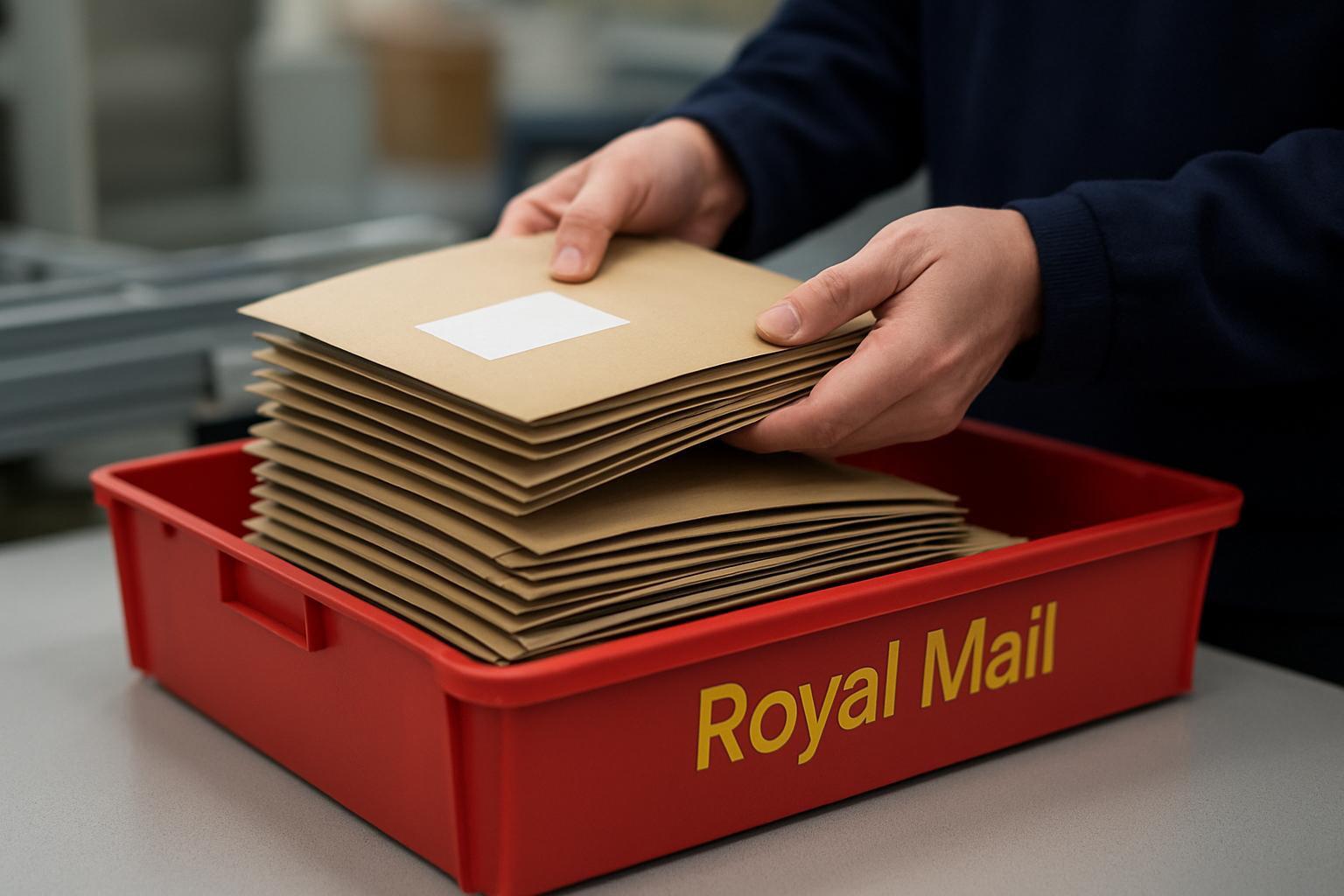
Postage is often 50 to 70 percent of total door-to-door cost for subscription copies, so shaving even a few pence per item changes the economics. Royal Mail (United Kingdom postal service) incentives such as Mailmark barcode discounts reward accurate sortation, packaging, and documentation. Downstream Access (DSA) consolidators can further reduce rates when volumes, formats, and lead times are aligned. International mail introduces added complexity: customs data, Value Added Tax (VAT) handling, and local injection points must be correct or parcels stall. Cliffe Enterprise Limited operates postal-compliant workflows and evaluates routing options, including local handover partners, to select the cheapest compliant path per destination class. The result is not just a better rate card but stronger deliverability and fewer unpleasant invoice surprises.
| Postage Lever | Estimated Saving | Notes |
|---|---|---|
| Weight Engineering to Stay Within Band | 3 to 7 percent | Adjust paper or binding to avoid crossing a weight threshold. |
| Mailmark Barcode and Accurate Presort | 2 to 6 percent | Requires compliant addressing and packaging specifications. |
| DSA (Downstream Access) Consolidation | 5 to 12 percent | Volume thresholds and lead-time reliability are essential. |
| International Local Injection | 4 to 10 percent | Pre-advised data and customs readiness reduce delays and fees. |
| Returns Reduction via Data Hygiene | 2 to 5 percent | Fewer undeliverables lower unit postage and handling costs. |
European Union (EU) distribution since Brexit demands particular care. Cliffe Enterprise Limited offers a unique IOS (International Outbound Service) solution for distributing consumer titles into Europe, designed to streamline customs data, align paperwork with destination rules, and inject titles via proven in-country partners. By validating shipment data in advance and using the correct product codes, the IOS (International Outbound Service) approach reduces delays and reversals that create subscriber dissatisfaction. Publishers benefit from competitive European rates and predictable transit times, which, in turn, protect renewal revenue. For United Kingdom (UK) publishers that must maintain service to Europe while controlling cost and risk, this single integrated pathway is both practical and resilient.
Deliverability Starts With Data: Address Hygiene and Mail-out Accuracy
Every undeliverable magazine wastes print, postage, and opportunity. Address hygiene is therefore a profit lever, not just a compliance box to tick. Matching against PAF (Postal Address File), de-duplicating households, and applying correct country formats can reduce returns by 20 to 40 percent, according to circulation benchmarks. The gains compound when barcodes, carrier sheets, and wrapping method support machine readability and in-sort stability. Cliffe Enterprise Limited runs postal-compliant data processes and proofing cycles that catch errors before they reach the press, then tracks mail-out accuracy to close the loop. That discipline means your circulation team can defend numbers with confidence when advertisers ask about reach and frequency.
Data governance matters as much as data quality. The General Data Protection Regulation (GDPR) requires lawful bases for processing and secure handling of personal data, including names and addresses. Robust encryption and role-based access should be standard, and integration via Application Programming Interface (API) with a Customer Relationship Management (CRM) system must be auditable. Ask suppliers to evidence their controls and describe their returns workflows: how are gone-aways recorded, how is suppression applied, and how fast does feedback flow into the source database? Cliffe Enterprise Limited provides mail-out accuracy reporting and returns management, enabling your team to track key performance indicators (KPI) such as first-time delivery rate, return rate, and average transit time. With the right metrics, deliverability ceases to be a mystery and becomes a managed result.
Production and Fulfilment Choices That Move the Needle
Packaging and finishing drive perception and postage alike. The decision between poly wrap, paper wrap, and envelope enclosing spans sustainability, machinability, cost, and address legibility. Stock choices influence both weight band and tactile quality, while binding methods affect thickness and stack stability. Cliffe Enterprise Limited delivers magazine printing that balances quality with cost, then matches each title’s audience and logistics profile to an optimal fulfilment method. When production and mailing are coordinated, you avoid the classic trap where a beautiful book is engineered into the wrong weight step or rejected by an automated sorter. That is why a single accountable partner, rather than a loose chain of vendors, consistently produces cleaner outcomes.
| Fulfilment Method | Advantages | Considerations | Compliance & Typical Uses |
|---|---|---|---|
| Poly Wrap | Highly machinable, protects against moisture, clear for cover impact | Recycling expectations vary by region | Postal-compliant when spec’d correctly; good for high-speed subscription runs |
| Paper Wrapping | Perceived as more sustainable, strong print area for messaging | Slightly higher unit weight; needs careful ink and sealing choices | Excellent for brand messaging and premium titles; compliant with correct layout |
| Envelope Enclosing | Privacy for inserts, tidy presentation | Higher material and handling cost; weight impact | Best for targeted mailings, multi-insert packs, and sensitive content |
A UK Publisher’s 90-Day Roadmap to Cut Postage, Boost Deliverability and Scale

Fast savings come from sequencing the right moves, not boiling the ocean. The following priorities reflect thousands of projects delivered by Cliffe Enterprise Limited, where small structural changes produced measurable returns without editorial compromise. By week 12, you should expect visibility of savings, fewer returns, and better predictability in cash flow. The plan assumes monthly drops, but weekly and biweekly schedules follow the same logic.
- Days 1 to 30: Diagnose and Stabilise. Audit specifications, weights, and recent invoices; run a data hygiene pass against PAF (Postal Address File) and de-duplicate; confirm packaging compliance; lock an interim Service Level Agreement (SLA). Establish baselines for cost per copy, deliverability, and return rate.
- Days 31 to 60: Optimise Postage and Workflows. Implement Mailmark barcodes and precise presort; shift qualifying volumes to Downstream Access (DSA) where viable; adjust stock or binding to remain within target weight bands; pilot paper wrap or alternative enclosing if compliance allows. Introduce mail-out accuracy reporting and proofing checkpoints.
- Days 61 to 90: Extend and Scale. For European Union (EU) copies, migrate to the IOS (International Outbound Service) pathway; expand international local injection where stable; renegotiate carriage based on improved profiles. Document repeatable processes, refine key performance indicators (KPI), and model return on investment (ROI) for the next fiscal year.
Case Example: How Discipline Turns into Pounds and Renewals
A United Kingdom (UK) consumer title shipping 120,000 copies monthly asked Cliffe Enterprise Limited to stem rising postage and returns. By reducing average book weight by 6 grams through a paper substitution, enabling Mailmark presorts, and shifting 40 percent of volume to a Downstream Access (DSA) consolidator, postage per item fell by 9.4 percent. Paper wrapping replaced envelopes for 60 percent of copies, improving machinability and shaving handling time. A PAF (Postal Address File) pass and de-duplication cut returns by 28 percent over two cycles. Net annualised savings exceeded six figures, while advertiser confidence improved because delivered circulation was demonstrably higher. The operational tone also changed: fewer last-minute crises, cleaner invoicing, and more time spent on content and partnerships rather than chasing pallets and manifests.
Crucially, the same playbook works at smaller scales. A 5,000-copy trade title used the IOS (International Outbound Service) route to stabilise European Union (EU) delivery times, lowering complaints and renewals leakage. With one accountable partner coordinating printing, fulfilment, and overseas routing, the team could release the publication calendar earlier and update sales materials with firmer delivery promises. When production, data, and postage are treated as one managed system, each issue becomes easier and cheaper to ship, and growth activities finally get the attention they deserve.
How Cliffe Enterprise Limited Aligns Quality, Cost and Reach
Print partners should be judged on outcomes: lower postage, better deliverability, solid quality, and transparent reporting. Cliffe Enterprise Limited brings magazine printing that is engineered for both aesthetics and weight control, with mailing fulfilment options spanning poly wrap, paper wrapping, and envelope enclosing. Postal compliance and mail-out accuracy are embedded practices, not add-ons, and United Kingdom (UK) and overseas postage expertise secures competitive rates. For European readers, the proprietary IOS (International Outbound Service) pathway reduces friction and keeps consumer titles moving. Worldwide magazine distribution covers small runs to bulk orders, and a quoting and consultation service helps you test scenarios before you commit. With decades of experience and thousands of projects completed, the company functions as an extension of your production team, delivering cost-effective consistency issue after issue.
Practical next steps are straightforward. Assemble your last three months of specs, mail files, and postal invoices, and request a structured review call. Ask for a side-by-side projection showing savings from weight engineering, Mailmark compliance, and DSA (Downstream Access) routing, plus a deliverability uplift forecast from address hygiene. Require clear operational guardrails: press timelines, proofing checkpoints, documentation templates, and returns workflows. When the partner can quantify trade-offs and demonstrate postal-compliant processes end to end, you are positioned to recapture budget without diluting print quality. That budget can then be reallocated to acquisition, editorial upgrades, or new territory tests, compounding the commercial effect far beyond a single line item on the profit and loss.
Final thought: bad print management is a tax on growth, while good management is a compounding asset. Industry statistics show typical publishers can remove 10 to 20 percent from their all-in mailing line within two cycles by tightening data, packaging, and entry routes. The sooner you measure and manage the whole system, the faster you turn hidden costs into visible gains.
Looking ahead: imagine the next 12 months with fewer returns, cleaner invoices, on-time European Union (EU) deliveries, and a calmer production floor. How much commercial headroom would that create for a richer editorial product, smarter acquisition tests, or new international editions? When will you decide to make print management for publishers a strategic advantage rather than an unavoidable overhead?
Elevate Magazine Printing With Cliffe Enterprise Limited
Power your magazine programme with quality, cost-effective magazine printing that cuts postage, improves deliverability, and scales distribution for United Kingdom (UK) and international publishers.