

In a market where every pound must justify its place on the balance sheet, publication printing and mailing can either be a cost sink or a strategic growth engine. For United Kingdom magazine brands, the physical magazine remains a premium touchpoint that deepens loyalty, drives renewals, and attracts advertisers who value verified reach. Yet, the path from press pass to letterbox involves dozens of technical decisions across paper, binding, wrapping, addressing, sortation and postage entry. This guide clarifies each stage, arming you to protect budgets, compress timelines, and improve deliverability without compromising brand standards.
Cliffe Enterprise Limited has supported publishers since 1991, bringing end-to-end expertise across quality magazine printing, mailing fulfilment, postal compliance, and domestic and international distribution. Whether you are scaling a consumer monthly, stewarding a trade journal, or running targeted bulk mail for advertisers, our perspective is practical and results-focused. You will find frameworks, data-informed tips, and real-world scenarios you can apply immediately to reduce risk and elevate performance.
Publication Printing and Mailing in the UK (United Kingdom): What It Takes Today
From editorial sign-off to a subscriber’s doormat, the modern workflow is a coordinated relay. Content and ads are finalised and exported to press-ready files in Portable Document Format (PDF) with colour managed in CMYK (cyan, magenta, yellow, key/black), then scheduled for the optimal press method based on run size and pagination. After printing and finishing, addresses are applied, wrapping or enclosing is performed, and manifests are generated for Mailmark and consolidator handover, ready for the network. Each handoff has service levels and dependencies, so a delay at prepress or data stage can cascade through print, fulfilment and postage, inflating costs and missing in-home dates.
The key cost and performance levers remain surprisingly simple: format, weight, machinability, accuracy of addresses, and volume density by destination. Yet the trade-offs are nuanced in practice. A lighter text stock lowers postage bands but may impact ink holdout and perceived quality; a thicker cover increases shelf impact but can tip an item over a thickness threshold. Meanwhile, address hygiene determines returns and redelivery fees, while the chosen fulfilment method affects sustainability credentials and presentation. The winning strategy balances aesthetics with engineering, turning creative intent into operational efficiency.
- Format and weight determine the price band and machinability.
- Data accuracy drives deliverability and reduces returns and waste.
- Fulfilment choice influences brand presentation and recyclability.
- Volume and sortation unlock consolidator discounts at scale.
Design and Print Specifications That Lower Cost Without Sacrificing Quality
Design decisions lock in most downstream costs before a single sheet is printed, so it pays to engineer the specification early. Consider a compact “digest” footprint over a full-size format where editorial permits; the smaller surface can reduce paper consumption and postage while reinforcing an intimate, premium reading experience. For text pages, selecting a well-calendered uncoated stock at 70–80 grams per square metre (GSM) often delivers legibility and tactile warmth with a favourable weight profile, while reserving a higher GSM for the cover maintains stiffness and perceived value. Colour profiles should be standardised to CMYK (cyan, magenta, yellow, key/black) from the outset, with soft-proofing and contract proofs used to set realistic expectations and avoid costly reprints.
The press choice should map to quantity, coverage, and schedule. Digital production excels for short runs, regional splits and late-binding personalisation, while lithographic offset printing shines for sustained predictability and the lowest unit rates at volume. To protect image fidelity, supply imagery at 300 dots per inch (DPI) where possible and embed fonts, layers and trim/bleed marks correctly in the final Portable Document Format (PDF). Minor adjustments, like trimming a millimetre off the finished size or reducing pagination by four pages, can shift an item into a lower postage band, effectively funding a higher-grade cover or an extra section without increasing overall cost.
| Aspect | Digital Printing | Lithographic Offset Printing |
|---|---|---|
| Best For | Short runs, split editions, late changes, personalised covers | Medium to very high volumes, consistent editions, tight unit costs |
| Unit Cost Curve | Flatter curve; cost-effective at low quantities | Declining steep curve; best at scale |
| Colour Stability | Very good with calibrated workflows | Excellent once on colour; stable across long runs |
| Speed to Press | Fast make-ready and turnarounds | Longer make-ready; faster at volume |
| Special Finishes | Increasing options; some limitations | Broad finishes: spot varnish, foils, embossing |
- Tip: Align finished size and spine thickness with machinable thresholds to avoid surcharges.
- Tip: Use paper with reliable availability to de-risk schedules during tight production windows.
- Tip: Standardise colour bars and targets to stabilise sign-offs and reduce on-press time.
Mailing Fulfilment Choices: Poly Wrap, Paper Wrapping and Envelope Enclosing Explained
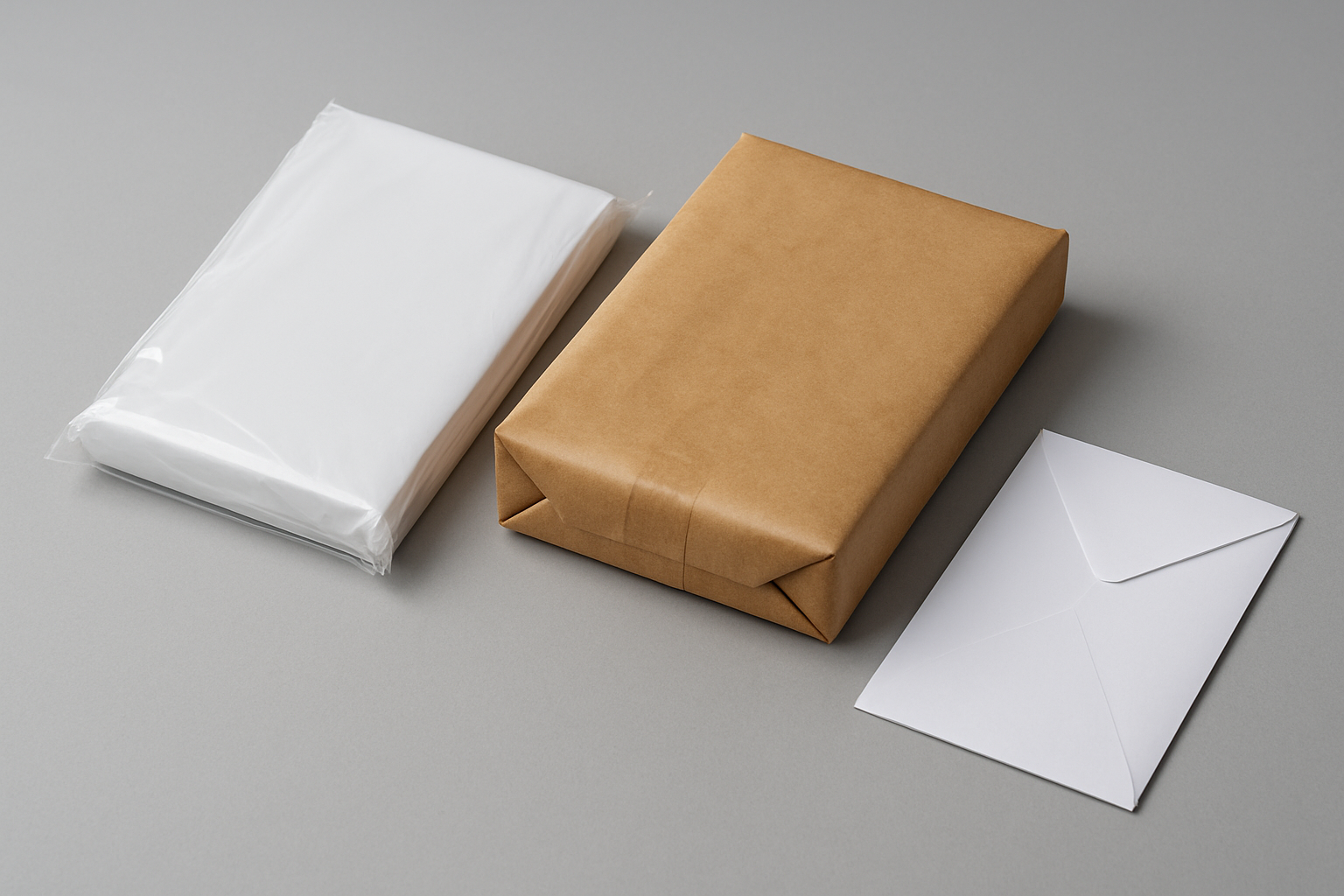
Fulfilment is where presentation meets practicalities. Poly wrap offers protection and visibility of the cover and any tip-ons, while paper wrapping provides a plastic-free, printable surface that doubles as an on-brand carrier. Envelope enclosing delivers a formal, protected pack for high-value communications or when multiple inserts must be contained. There is also the option of “naked” or self-mailing, in which the magazine is addressed directly; this reduces materials but requires careful attention to durability and address placement.
Your choice should be guided by safety in transit, sustainability targets, and machinability. Paper wrapping is increasingly favoured where environmental policies prioritise recyclability and a single-material pack, while modern high-clarity films can be recycled in many schemes and offer moisture resistance on longer routes. When enclosing, ensure the total thickness remains within machinable limits to avoid reclassification. With all methods, the address window or print area must align with postal standards and leave room for a Mailmark barcode and any Printed Postage Impression (PPI) if used.
| Method | Strengths | Watchouts | Best Use Cases |
|---|---|---|---|
| Poly Wrap | Protects from moisture; shows cover; cost-efficient at scale | Plastic perception; check local recycling guidance | Consumer monthlies, titles with cover sells or tip-ons |
| Paper Wrapping | Plastic-free; fully printable; premium feel | Slightly higher weight; ink coverage management needed | Sustainability-focused brands; member journals |
| Envelope Enclosing | High protection; can carry multiple inserts | Higher material and hand-work cost; thickness impacts postage | High-value mailings; complex multi-piece packs |
| Naked/Self-Mailer | Minimal materials; lowest pack cost | Durability and scuffing; strict address placement | Durable trade titles; short routes; cost-critical runs |
Cliffe Enterprise Limited provides all three options at scale: poly wrap, paper wrapping, and envelope enclosing. Our operators calibrate ink coverage on wraps to safeguard readability and scannability, and we stage test-packs to confirm machinability before full production. For campaigns seeking extra attention, on-wrap teasers and targeted cover flashes can be produced without jeopardising automated handling, balancing creativity with operational certainty.
Postal Compliance, Sortation and Cost Control in the UK (United Kingdom) and Overseas
Postal compliance is the critical hinge between a beautiful magazine and a delivered one. Address data should be validated against the Postal Address File (PAF) to standardise formats and completed with movers checked via National Change of Address (NCOA) where permitted under General Data Protection Regulation (GDPR) rules. The correct indicia, Mailmark barcode and routing marks must be positioned within safe zones, and the pack’s dimensions kept within machinable tolerances. Documentation, electronic manifests and tray or bag labels need to match declared content precisely to avoid delays or penalties at entry.
Cost control is a function of weight, format, and how deeply your mail is sorted before induction. Downstream Access (DSA) consolidators reward pre-sorted, machine-readable mail with lower rates, especially when volume density by region allows deeper sortation. Furthermore, consistent on-time handover improves delivery consistency, helping meet Service Level Agreements (SLA) you set for in-home dates. For many titles, a modest investment in data hygiene and machinability testing returns multiples in reduced returns, fewer surcharges and better delivery performance. When you add structured reporting against Key Performance Indicators (KPI) such as “on time in full,” the commercial picture becomes even clearer.
| Area | What to Verify | Why It Matters |
|---|---|---|
| Address Data | PAF standardisation, NCOA where permitted, de-duplication | Reduces returns and improves deliverability |
| Pack Design | Safe zones for address and barcode; glare and contrast on wraps | Ensures machine readability and avoids manual handling charges |
| Weight and Size | Check against machinable and price band thresholds | Controls postage costs and speeds processing |
| Documentation | Accurate manifests, labels, trays/bags and handover files | Prevents misroutes and entry delays |
| Delivery Targets | Define and monitor SLA and KPI reports | Aligns performance with commercial commitments |
Cliffe Enterprise Limited hardwires compliance into every step, from automated data hygiene to Mailmark-ready artwork checks and live handover validation. Our customers benefit from consolidated access to competitive rate cards and proactive exceptions management that protects your in-home window.
International Distribution Strategy: Europe via IOS (International Outbound Solution) and Worldwide
When your audience stretches beyond the United Kingdom, global distribution must be engineered for reliability and value. Europe-bound copies require careful routing to minimise transit time, ensure customs readiness, and meet country-specific addressing standards. Cliffe Enterprise Limited’s IOS (International Outbound Solution) is designed for consumer titles seeking dependable, competitively-priced European entry, combining optimised injection points with compliant documentation to reduce touchpoints and improve first-time delivery. The result is predictable transit while holding the line on cost, even for mixed volumes by country.
Beyond Europe, regional strategies vary by geography, service expectation, and local infrastructure. Zone-based consolidations, selective priority routing for advertisers’ samples, and robust undeliverable handling policies are crucial. Where address data varies in format, we normalise where permissible and apply country-specific best practices to variable fields, protecting deliverability and subscriber experience. For publishers testing new markets, staged pilots allow you to validate response and refine formats before committing to larger volumes, transforming international expansion into a managed, low-risk programme.
| Region | Entry Approach | Addressing Standards | Notes |
|---|---|---|---|
| Europe | IOS injection with optimised hubs | Country-specific conventions; diacritics preserved | Customs-ready data and documentation streamline handover |
| North America | Consolidated air injected into regional hubs | State and ZIP code equivalents observed | Transit predictability improves with consistent bagging |
| Asia-Pacific | Hybrid priority and economy depending on title cadence | Localised address sequence as required | Moisture-resistant wraps recommended for monsoon routes |
| Rest of World | Selective priority lanes for time-sensitive copies | Validate against local formats where available | Test routes and gather delivery feedback before scaling |
With overseas expertise and negotiated rates, Cliffe Enterprise Limited supports small pilots through to bulk shipments, orchestrating worldwide magazine distribution with the same rigour we apply domestically. If you need advice on route design, customs data, or staged testing, our quoting and consultation team will calibrate a solution around your audience and budget.
Work With Cliffe Enterprise Limited: From Brief to Letterbox With Confidence
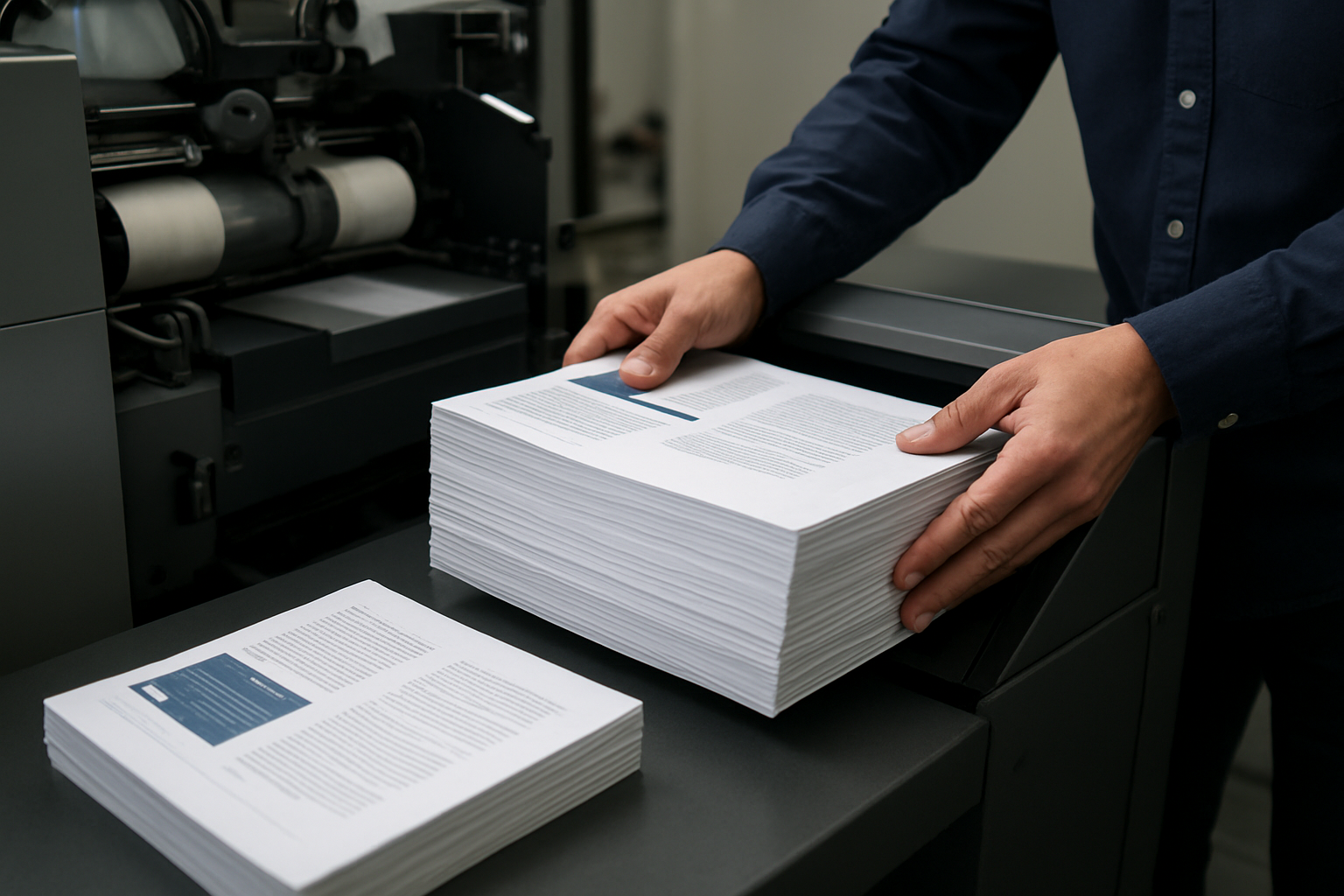
As a full-service partner, we translate editorial and commercial intent into a production plan that balances quality, speed and cost. Our magazine printing capability focuses on consistent colour, tight registration and stable finishing across multiple plants, ensuring resiliency and capacity when schedules compress. Mailing fulfilment spans poly wrap, paper wrapping and envelope enclosing, with postal-compliant artwork checks and on-machine verification safeguarding accuracy at scale. Throughout, we manage schedules and tolerances against clear Service Level Agreements (SLA), so the moving parts align to your time-sensitive campaigns.
Postal compliance and cost control are baked into our operating model. Data is cleansed, standardised and de-duplicated; packs are engineered for machinability; manifests and labels are automatically validated before handover. For distribution, our team advises on United Kingdom and overseas options, including our IOS (International Outbound Solution) for Europe, so you are not paying for more speed than you need nor risking delays through over-economising. Whether you are moving 1,000 copies or 500,000 copies, our approach is the same: protect brand quality, reduce avoidable spend, and increase deliverability.
| Challenge | Impact If Unmanaged | Cliffe Enterprise Limited Approach |
|---|---|---|
| Excess weight per copy | Higher postage band; budget overruns | Re-spec paper and pagination to protect bands |
| Inaccurate addresses | Returns, delays, wasted print and postage | PAF and NCOA processes with audit trails |
| Non-machinable pack design | Surcharges and manual handling | Preflight checks and machinability tests |
| Fragmented international routing | Long transit times and unpredictable delivery | IOS European entry and global consolidations |
Practical Scenarios, KPI (Key Performance Indicator) Benchmarks and a Publisher Checklist
Consider an independent culture title moving from boutique runs to national distribution. By switching to a lighter text stock and a compact format while adopting paper wrapping, the team kept the tactile feel, entered a lower postage band, and improved perception with a fully branded wrap. Another example: a trade monthly with multiple regional inserts consolidated to a digital pre-binding workflow and late-stage versioning, cutting makereadies and slashing waste without changing pagination. In both cases, disciplined address hygiene and Mailmark compliance reduced returns and tightened in-home windows, supporting advertiser confidence.
When performance matters, define the metrics before you brief your team or suppliers. Track “on time in full” against the announced in-home date, delivery rate by region, return rate as a percentage of mailed volume, and spend per delivered copy including print, fulfilment and postage. These measures make it plain where to focus improvement cycles and where creative changes can be funded by operational savings. If you need a simple visual, imagine a four-quadrant scorecard: quality, cost, speed and sustainability, with each project plotted against the last three issues to show trend lines at a glance.
| KPI (Key Performance Indicator) | Definition | Why It Helps |
|---|---|---|
| On Time In Full (OTIF) | % of mail delivered within the target delivery window | Demonstrates reliability to readers and advertisers |
| Return Rate | Undeliverable copies divided by total mailed volume | Highlights data hygiene and address quality issues |
| Cost per Delivered Copy | Total spend / successful deliveries | Captures the true effectiveness of spend across stages |
| Machinability Compliance | % of items meeting automated processing standards | Correlates to lower surcharges and faster delivery |
- Specify objectives, audience and in-home window before creative sign-off.
- Engineer size, pagination and paper to hit machinable thresholds.
- Standardise colour in CMYK (cyan, magenta, yellow, key/black) and supply press-ready Portable Document Format (PDF) files.
- Choose fulfilment that supports sustainability and presentation goals.
- Validate data against Postal Address File (PAF); apply National Change of Address (NCOA) where permitted.
- Preflight postal elements: address block, barcodes, Printed Postage Impression (PPI) and safe zones.
- Select appropriate Downstream Access (DSA) or consolidator lanes for budget and timing.
- Request KPI and exception reporting tied to your Service Level Agreement (SLA).
- Pilot international routes before scaling volume.
- Debrief after each issue and bank the savings into quality or reach.
Cliffe Enterprise Limited offers quoting and consultation at each stage, drawing on decades of production and mailing fulfilment experience to tailor specifications, rationalise cost, and strengthen deliverability. From small-batch trials to bulk orders, our goal is simple: make every issue easier, cheaper and more effective than the last.
Frequently Asked Questions About Publication Printing and Mailing
What is the fastest way to reduce total cost without hurting quality? Re-spec weight and pagination to hit machinable thresholds, then secure consolidator rates aligned to your geography mix. Often, those two steps fund a higher-grade cover or an extra editorial feature at no net increase.
How do I protect brand colour across reprints and re-runs? Standardise CMYK (cyan, magenta, yellow, key/black) profiles, lock in contract proofing, and keep paper and finish choices consistent. Colour stability improves when you control variables upstream.
Which fulfilment method should I choose? If sustainability and printability matter, choose paper wrapping; if visibility and moisture resistance are critical, use poly wrap; if multiple inserts must travel together, envelope enclosing is safest. We can test-pack and advise.
What if I ship to multiple countries? Use our IOS (International Outbound Solution) for Europe and tailored consolidations elsewhere. We will harmonise addressing standards, prepare compliant documentation, and balance speed with budget for each region.
One promise, delivered: orchestrate the moving parts of print, data, fulfilment and postage so your magazines arrive on brand, on time, and on budget. Imagine your next issue landing with clinical precision while spending less per delivered copy, freeing resources for editorial or growth. In the next 12 months, which operating lever will you pull first to raise quality, lower cost, and scale publication printing and mailing performance?
Elevate Publication Printing and Mailing with Cliffe Enterprise Limited
Cliffe Enterprise Limited delivers Magazine printing (quality, cost-effective production) that lowers postage, improves compliance and scales reach for publishers, bulk mailers, distributors, agencies and production managers.